

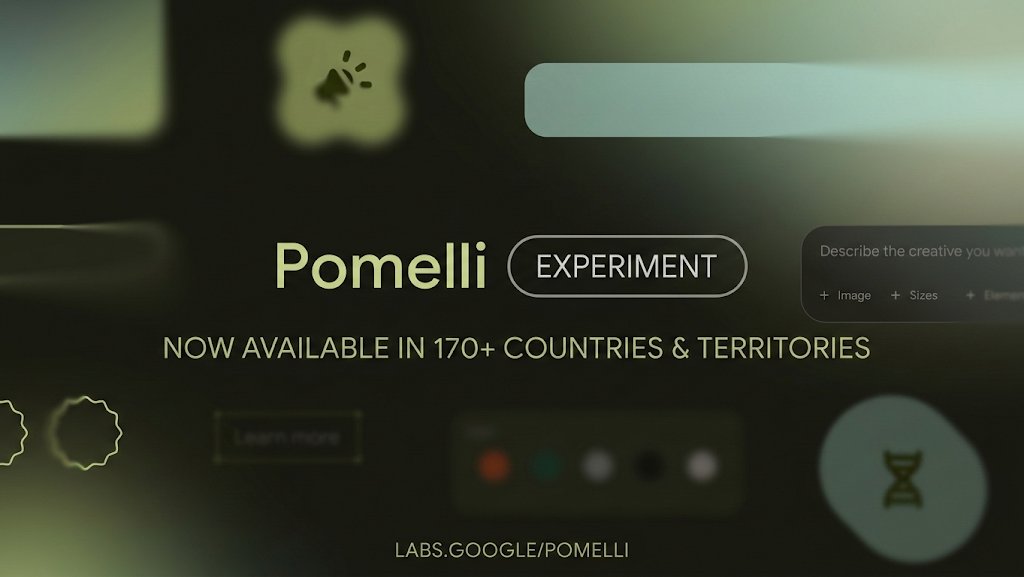
March 9, 2026 — Mountain View, Calif. Google Labs announced the expansion of its experimental AI marketing tool, Pomelli, to over 170 countries and territories, responding to user feedback for broader global access.
The official announcement came via an X post from @GoogleLabs, which has garnered over 1.5 million views, nearly 6,000 likes and hundreds of reposts.
We’ve heard you and… it’s happening 🙂 🌎
We just expanded Pomelli to over 170 countries & territories!
We can’t wait to see how you use it. Get started now at: https://labs.google.com/pomelli/about/
A follow-up post linked to the availability list, confirming access in numerous countries across Africa, Asia, Latin America, North America, Oceania and the Middle East, including the United States, Canada, Australia, Brazil, India and Japan. Notably absent are most European Union countries, prompting user comments questioning the exclusions.
Tool Features and Functionality
Pomelli targets small businesses, allowing users to input a website URL for AI analysis of branding elements. It then generates customized, on-brand marketing materials such as ads, social media posts, headlines, calls-to-action (CTAs) and animated video creatives. The tool leverages advanced models including NanoBanana and Veo 3.1, and is free to use.
Access requires a Google account and is limited to users aged 18 and older. Product features may vary by country.
Launch Background
Pomelli entered public beta on October 28, 2025, initially available only in the United States, Canada, Australia and New Zealand, as detailed in a Google blog post. Coverage at launch highlighted its potential: “Google Labs’ free new experiment creates AI-generated ads for your small business.” A February 2026 update added the “Photoshoot” feature, covered by PetaPixel.
Social Media Amplification
The expansion has sparked buzz on social platforms. Influencers like @JulianGoldieSEO demonstrated features, while accounts on Facebook and Instagram shared reels. Secondary blogs, including ThatWare and CodeAgni, provided post-expansion guides.
No major traditional outlets like TechCrunch or The Verge have reported on the expansion as of March 12, 2026.