
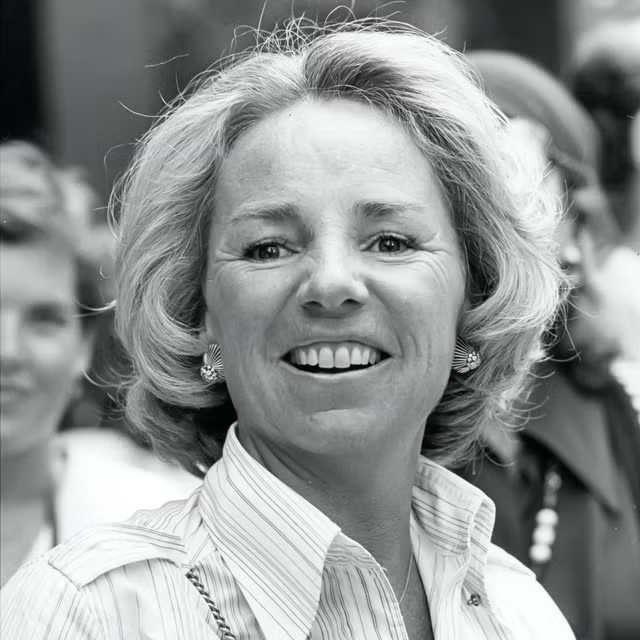
Ethel Skakel Kennedy was born into a family whose background combined remarkable economic success, deep religious conviction, and strong social influence, all of which played a defining role in shaping her personality, values, and future contributions to public life.
She was born on April 11, 1928, in Chicago, into the prominent Skakel family, a household that would rise to significant wealth and status during her early childhood. Her father, George Skakel, embodied the classic American success story.
Beginning his career as a modest railroad clerk earning only eight dollars per week, he demonstrated determination and entrepreneurial vision by joining with several partners to establish a small coal and coke business.
Over time, this venture expanded and evolved into the Great Lakes Coal & Coke Company, which later became the Great Lakes Carbon Corporation, a highly successful and diversified industrial enterprise.
Through this business success, George Skakel accumulated substantial wealth, enabling his family to live a life of privilege and comfort.
This financial stability not only provided material advantages but also opened doors to elite social circles and educational opportunities that would significantly influence Ethel’s upbringing.
Equally influential in shaping Ethel’s early life was her mother, Ann Brannack Skakel, who brought a strong sense of faith, discipline, and moral guidance into the household. A devout Roman Catholic, Ann ensured that religion was a central pillar of family life.
She instilled in her children values such as compassion, charity, humility, and a sense of duty toward others.
These principles would later become evident in Ethel’s lifelong commitment to humanitarian causes and social justice.
The combination of her father’s business-driven ambition and her mother’s spiritual devotion created a balanced environment in which both achievement and service were highly valued.
During Ethel’s early childhood, the family relocated from Chicago to the East Coast, eventually settling in Greenwich in 1936.
Greenwich was, and remains, one of the most affluent communities in the United States, and the Skakels’ move there symbolized their arrival into the upper echelons of American society.
George Skakel purchased a large English-style manor house on Lake Avenue, a sprawling residence with thirty-one rooms that reflected the family’s wealth and social standing.
Growing up in such an environment, Ethel experienced both the privileges and expectations of elite society.
Despite the luxurious setting, the household was known for being lively, structured, and family-oriented.
Ethel was one of seven children, and life in the Skakel home was energetic and often competitive, helping to foster her strong personality, confidence, and ability to navigate complex social environments.
Education played a crucial role in Ethel’s development, and her family ensured that she attended some of the most prestigious institutions available.
She studied at Greenwich Academy and later at the Convent of the Sacred Heart in the Bronx, both of which emphasized academic excellence alongside moral and religious instruction.
She eventually enrolled at Manhattanville College of the Sacred Heart, where her social world expanded significantly.
It was during her time at Manhattanville that Ethel met Jean Kennedy Smith, a friendship that would have a profound impact on her future.
Through Jean, Ethel was introduced to the influential Kennedy family, one of the most powerful and well-known families in American politics.
This connection marked the beginning of a new chapter in her life, bridging her own wealthy industrial background with a family deeply rooted in political power and public service.
A defining and tragic moment in Ethel’s family background occurred in 1955 when both of her parents were killed in a private airplane crash .
This sudden loss was a devastating blow, occurring at a time when Ethel was still relatively young and building her own family life.
The tragedy not only left an emotional impact but also forced her to confront the responsibilities and realities of life without her parents’ guidance.
Such an event strengthened her resilience and independence, qualities that would become essential in the years to come, particularly as she navigated the challenges associated with being part of a high-profile political family.
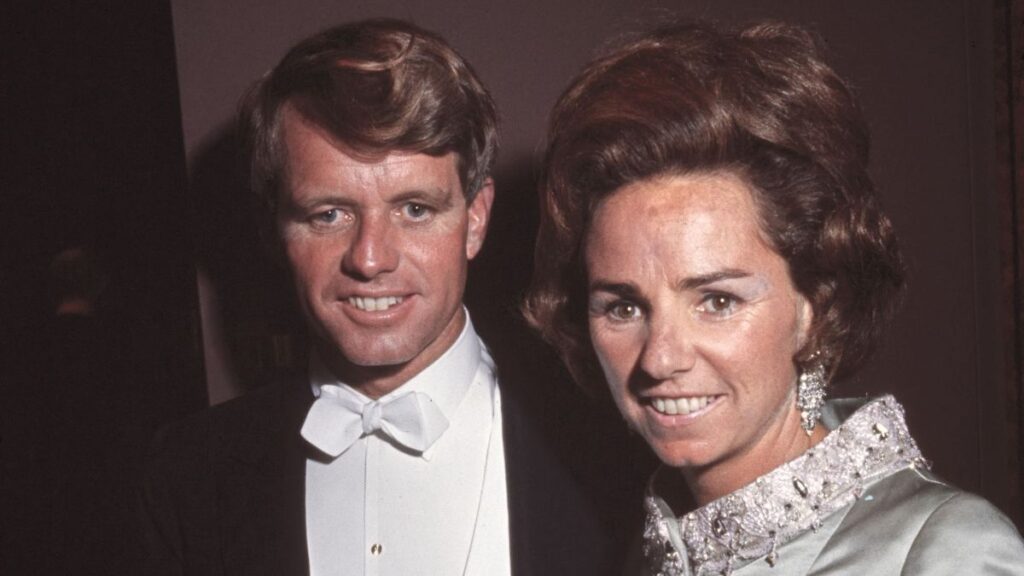
Ethel’s marriage to Robert F. Kennedy further transformed her life and solidified her place within the sphere of national and international influence.
Through this union, she became closely connected to figures such as John F. Kennedy, integrating her into a family that not only held immense political power but also faced intense public scrutiny and historical significance.
While her own upbringing had prepared her for life among the elite, her role within the Kennedy family required her to adapt to an even more demanding environment, where public service, political ambition, and personal sacrifice were intertwined.
Ethel’s family background, therefore, can be understood as a powerful blend of wealth, faith, and resilience.
From her father, she inherited a sense of ambition, determination, and confidence derived from his rise in the business world.
From her mother, she absorbed a deep commitment to religious values and humanitarian ideals.
Her upbringing in a large, affluent household taught her how to manage relationships, handle pressure, and maintain strong family bonds.
The tragic loss of her parents further deepened her emotional strength and sense of purpose.
All these elements combined to prepare her for the significant role she would later play as a member of the Kennedy family and as an advocate for human rights and social justice.
In essence, Ethel Kennedy’s family background was not merely a story of privilege but a complex foundation that blended opportunity with responsibility, comfort with discipline, and success with hardship.
It shaped her into a figure capable of navigating both personal tragedy and public life with resilience and grace, ultimately influencing her enduring commitment to making a positive impact on society.